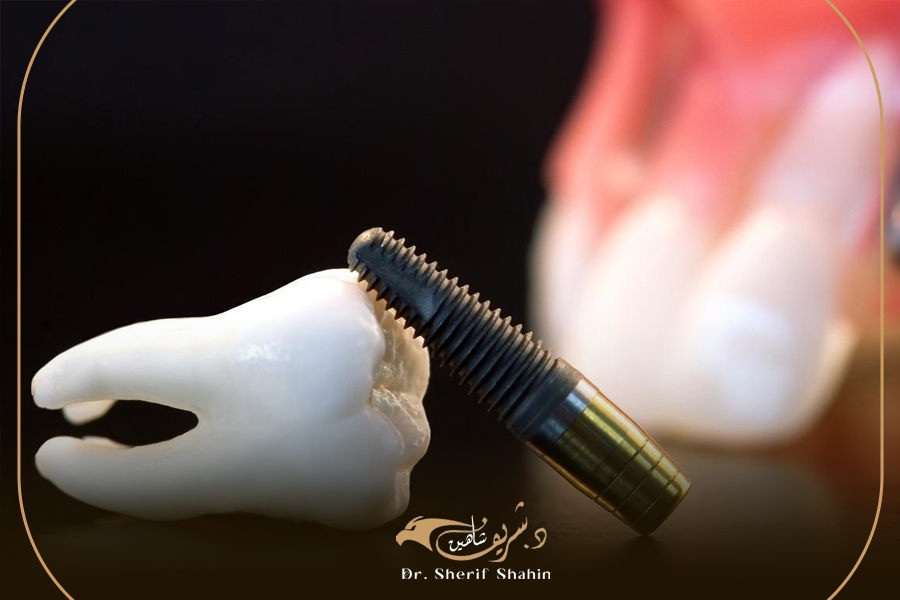
Dental implants are a surgical procedure intended to replace missing or damaged teeth with permanent artificial teeth. Dental implants are considered one of the most effective and successful dental procedures to restore the function and appearance of natural teeth.
Stages of dental implants:
Consultation and evaluation: The dentist evaluates the health of the mouth and gums and conducts X-ray examinations to determine the patient’s suitability for dental implants.
Implant Placement: A titanium implant is placed in the jawbone to replace the root of the missing tooth.
Osseointegration: The jawbone heals with the implant over a period of time ranging from several weeks to several months.
Installing the abutment: An abutment is installed over the implant to stabilize the artificial tooth.
Implantation of an artificial tooth: A crown, bridge, or artificial denture is fitted over the abutment to restore the function and appearance of the missing tooth.
Advantages of dental implants:
Permanent replacement for missing teeth: Implanted teeth remain fixed in place and do not move.
Improve oral function: Dental implants help improve the ability to chew and speak.
Improving the aesthetic appearance: The implanted teeth look natural and contribute to improving the smile.
Increased self-confidence: Dental implants can increase a person’s self-confidence and appearance.
Maintaining oral health: Dental implants help maintain healthy gums and surrounding bones.
Disadvantages of dental implants:
Cost: Dental implants are more expensive than other options to replace missing teeth.
Time: Treatment may take several months to complete.
Risks: Some complications, such as infection or failure of osseointegration, may occur, but they are rare.
Conditions for the success of dental implants:
Oral and gum health: The patient must be in good health and not suffer from active gum disease.
Bone density: The patient must have a sufficient amount of jaw bone to support the implant.
Smoking: Smokers should quit smoking before and after transplantation to increase their chances of success.
Adherence to treatment: The patient must adhere to the doctor’s instructions and regular follow-up.
In conclusion:
Dental implants are an excellent option to replace missing teeth and improve oral health and aesthetic appearance. If you are considering dental implants, consult your dentist to evaluate your condition and determine if dental implants are right for you.