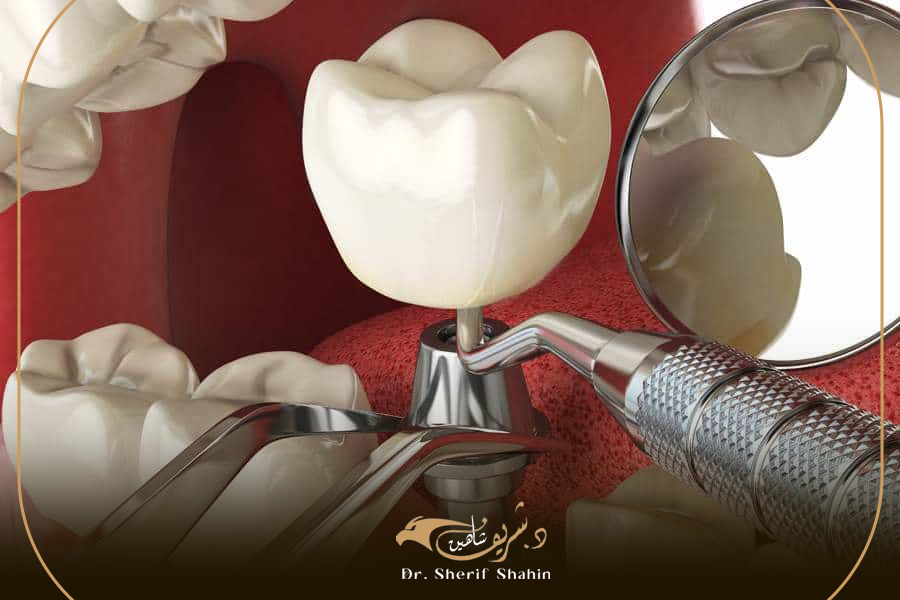
Prosthodontics are restorative treatments intended to restore the function and appearance of damaged or missing teeth. Common types of dental implants include:
1. Crowns:
Description: A full cap that completely covers the affected tooth above the gum line.
Use: To restore weak, chipped, or severely discolored teeth, or to cover dental implants.
Material: Made of porcelain, metal, or a combination of the two.
2. Bridges:
Description: A fixed fixture replaces one or more missing teeth by attaching them to adjacent teeth.
Use: To fill gaps resulting from tooth loss, and prevent adjacent teeth from moving.
Materials: Similar to crowns in the materials used.
3. Porcelain veneers (veneers):
Description: Thin porcelain veneers are placed on the front surface of the teeth to improve their appearance.
Use: To cover teeth defects such as pigmentation, cracks, or small gaps.
Advantages: Porcelain veneers are considered an excellent cosmetic option for improving the appearance of the smile, as they provide natural and beautiful results.
note:
Choosing the right type of dental implant depends on several factors, including:
Healthy teeth and gums: The teeth and gums surrounding the implant should be healthy.
Location of the missing or damaged tooth: Appropriate treatment varies depending on the location of the tooth.
Amount of damage or loss: The degree of damage or loss determines the type of assembly required.
Cost: The cost of dental implants varies depending on the type and materials used.
Patient Preferences: Some patients may prefer certain types of formulations over others.
It is important to consult a dentist to evaluate your condition and determine the best treatment option for you.