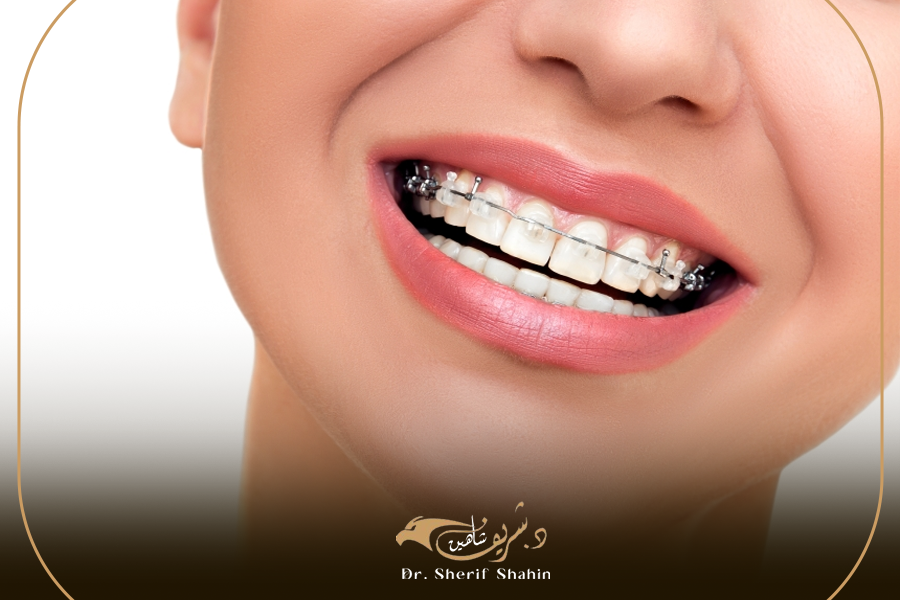
Metal braces are one of the most common and widely used types of braces.
The components:
Brackets: Small metal pieces that are attached to the front surface of the teeth.
Wire: A thin metal wire that passes through the supports and connects them together.
Ligatures: Small rubber bands or thin wires are used to secure the wire to the stents.
How it works:
The orthodontist attaches the braces to the teeth using a special adhesive.
The wire is passed through the supports and attached to them using ties.
The doctor periodically adjusts the wire to increase pressure on the teeth and gradually move them to the correct position.
Features:
High effectiveness: Metal braces are effective in treating all types of dental problems, including complex cases.
Lower cost: Metal braces are considered less expensive compared to other types of braces. Durability and rigidity:
Metal braces are durable and hard, making them resistant to damage.
Disadvantages:
Unaesthetic appearance: Metal braces are more visible than other types of braces, which may affect the patient's aesthetic appearance.
Difficulty in brushing: It may be difficult to brush teeth effectively while wearing metal braces, which increases the risk of tooth decay and gum disease.
Feeling of discomfort: The patient may feel some discomfort and pain at the beginning of treatment and after each visit to the doctor to adjust the braces.
Duration of treatment:
The duration of metal braces treatment usually ranges between 18 months and 3 years but may vary depending on the patient's condition.
Conclusion:
Metal braces are an effective and economical option for treating dental problems, but they may affect the aesthetic appearance and require some effort in cleaning. The patient should consult an orthodontist to evaluate his condition and determine whether metal braces are the appropriate option for him.