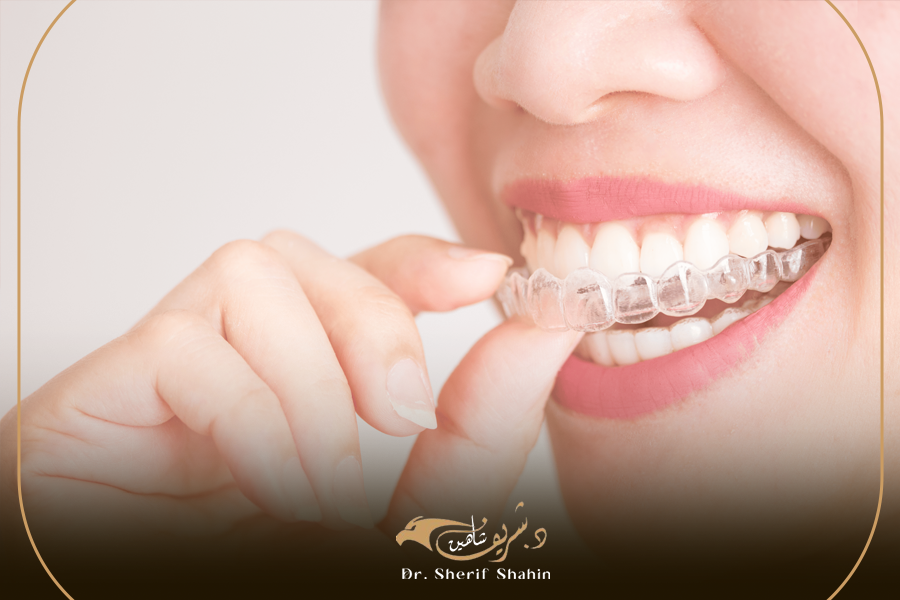
What are Clear Aligners?
Definition: A type of orthodontics that uses removable, clear plastic molds to move and adjust teeth.
Material: Made of special medical grade plastic, transparent and almost invisible when worn.
Objective: Treat mild to moderate dental problems, such as:
Crooked or slightly tilted teeth.
Small spaces between teeth.
Some cases of mild bite.
Features of the transparent calendar:
Virtually Invisible: Provides a better aesthetic appearance than traditional metal braces.
Removable: It can be removed when eating, brushing teeth, or on special occasions.
COMFORTABLE: Less friction on gums and cheeks than metal braces, reducing irritation.
Easy to clean: It can be easily cleaned by removing and washing.
Disadvantages of clear braces:
Cost: Usually more expensive than metal braces.
Duration of treatment: The duration of treatment may be longer than metal braces in some cases.
Limitations of use: It may not be suitable for all orthodontic cases, especially severe cases.
Requires Discipline: Casts should be worn for a minimum of 20-22 hours per day for best results.
How do Clear Aligners work?
Consultation: The dentist evaluates the condition of the teeth and takes 3D digital images.
Treatment Plan: A customized treatment plan is created using a computer program.
Mold making: A series of transparent molds are manufactured based on the treatment plan.
Wearing: The patient wears each cast for approximately two weeks, then moves on to the next cast.
Follow-up: Visit the dentist regularly to monitor progress and adjust the treatment plan if necessary.
Conclusion:
Clear Aligners are an effective and suitable treatment option for many people looking for an invisible and comfortable way to straighten their teeth. However, you should consult a dentist to evaluate the condition and determine whether clear aligners are the best option.