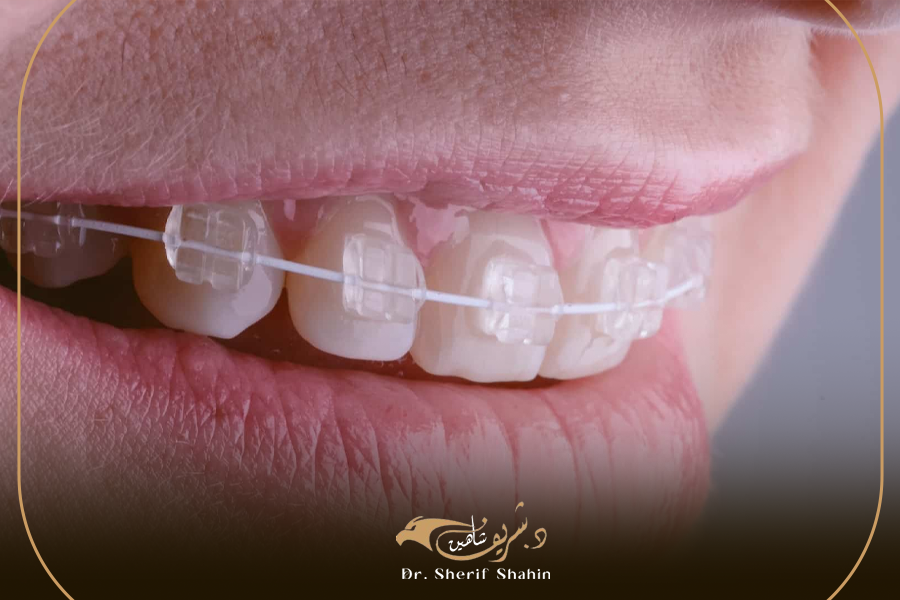
Ceramic braces are a type of braces that are used to correct dental problems and improve their appearance. Ceramic braces are similar to traditional metal braces in how they work, but they feature brackets made of a clear or tooth-colored ceramic material, making them less noticeable than metal brackets.
Advantages of ceramic braces:
Aesthetic appearance: Its color matches the natural color of teeth, making it less noticeable than metal braces.
High effectiveness: It is effective in correcting most dental problems, such as crowding, spacing, and jaw mismatch.
Comfortable: It is usually comfortable for patients and does not cause irritation to the gums or soft tissues in the mouth.
Disadvantages of ceramic braces:
Cost: Usually more expensive than metal braces.
Time: Treatment may take longer compared to metal braces in some cases.
Breakage: They can be more susceptible to breakage or damage than metal braces, so they require special care.
Staining: Ceramic fixtures may discolor over time, especially if they are not cared for properly.
Who are ceramic braces suitable for?
Porcelain braces are a good option for people who are looking for a cosmetic solution to dental problems, and who want to straighten their teeth unobtrusively.
Tips for caring for ceramic braces:
Brushing teeth regularly: Teeth should be brushed after every meal using a soft toothbrush and toothpaste that contains fluoride.
Using medical floss: Medical floss must be used daily to remove food residue from between teeth and fixtures.
Avoid hard and sticky foods: You should avoid eating hard and sticky foods that may break fixtures or wires.
Visit the dentist regularly: You should visit the dentist regularly to check the braces, clean the teeth, and make any necessary adjustments.
Duration of treatment:
The duration of treatment with ceramic braces varies depending on the patient's condition and the complexity of the problem but usually ranges between 18 months and 3 years.
Conclusion:
Ceramic braces are an effective cosmetic option for treating dental problems, but they may be more expensive and require special care. You should consult a dentist to evaluate the condition and determine whether ceramic braces are the right option for you.